Why Do Creative People All Dress the Same?
Maybe they don't. Maybe we just notice the clothes differently.
By Tommy — Founder & Creative Director, h./label
I've always been interested in how differently people choose to dress.
Some people keep things very simple: a clean shirt, good trousers, great shoes. Nothing particularly loud, but somehow everything feels right. Chic, even. Then there are people who go completely the other way — colour, unusual proportions, vintage pieces, something unexpected. Sometimes the clothes are even bolder than the person wearing them.
What I like is when the clothes feel right for the person. When you can tell they're comfortable in what they're wearing, and the choice somehow makes sense once you understand a little about who they are and how they live.
That's probably why I've always been drawn to creative people. Not because they all dress the same — they really don't — but because their choices often feel connected to the way they think and live.
And yet, there is a certain look that keeps coming back. Relaxed trousers. Oversized shirts. Sneakers. Muted colours. Simple layers. From the outside, it can sometimes look like everyone is wearing the same thing.
So I started wondering: is that actually a lack of individuality, or is there something else going on?
When repetition becomes a choice
One of the most obvious examples is Matilda Kahl, an Art Director at Saatchi & Saatchi, who famously created her own work uniform: black trousers, a white blouse and a leather rosette. In a 2015 essay for Harper’s Bazaar, Kahl explained that the idea came after a stressful morning spent trying to decide what to wear before an important meeting. She eventually decided to remove that decision altogether — buying multiple versions of the same blouse and trousers and making the outfit her daily uniform.
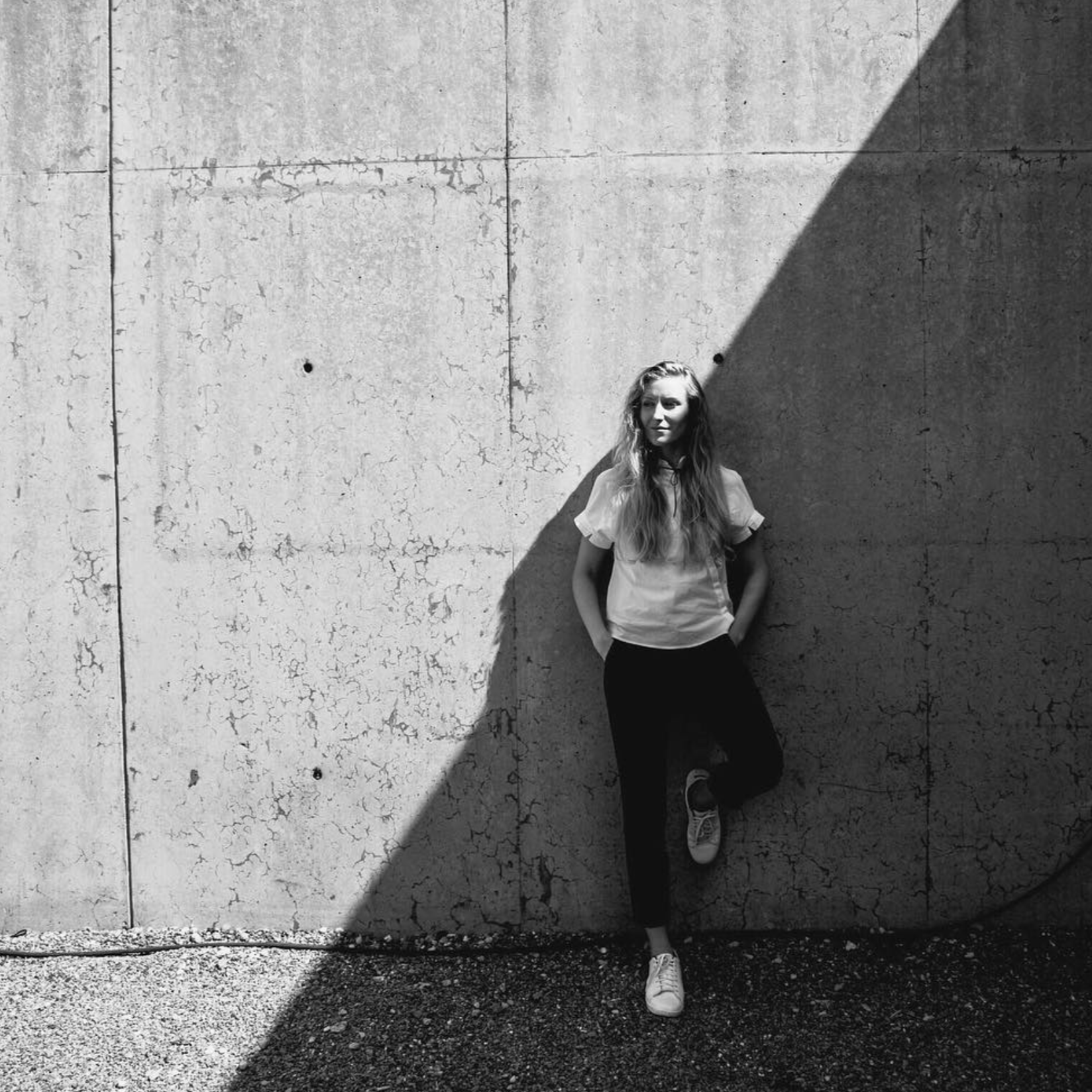
MATILDA KAHL, Art Director, Saatchi & Saatchi, image: @lilltrill
What I find interesting is that the decision wasn't really about fashion. It was about attention. She wanted to stop spending energy on her clothes and put it somewhere else.
You could look at that and say, “She wears the same thing every day.”
Or you could say, “She knows exactly what works for her.”
The second one feels more interesting to me.
Tom Lardner, Creative Director & Co-founder of PLUS, takes a much simpler approach.
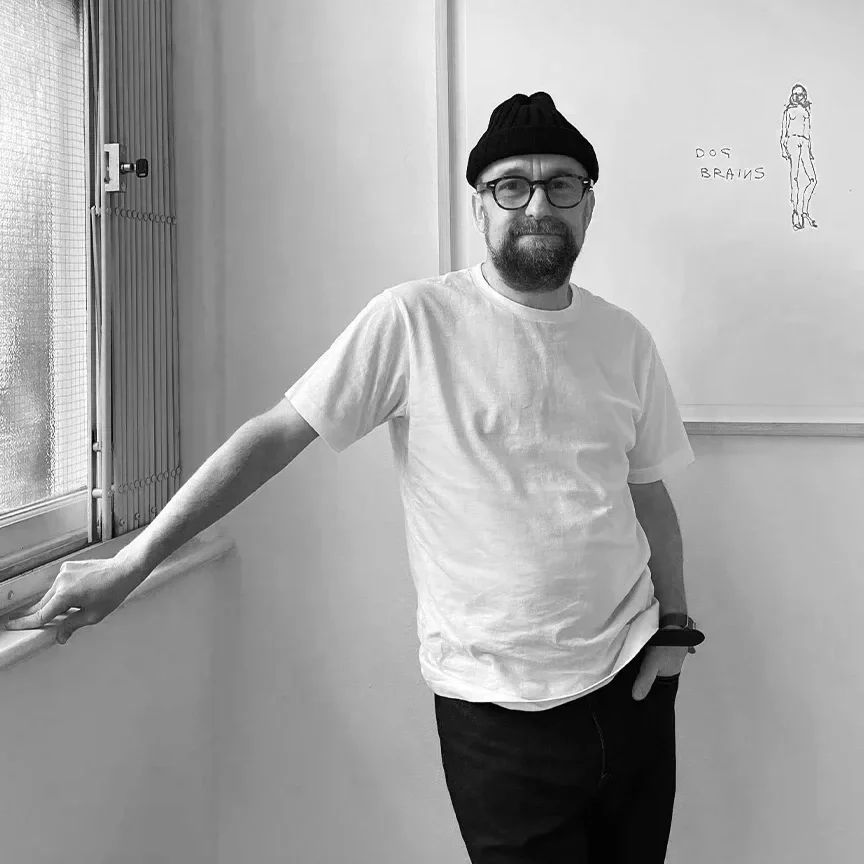
Tom Lardner- Creative Director & Co-founder, PLUS — Image: Florence Lardner / MUJI
In an interview with MUJI, he was asked how he dresses to feel comfortable. His answer was straightforward: “I feel most comfortable in a white t-shirt and jeans. Classic. Basic. Simple.” He also mentioned that he had spent most of his adult life looking for the perfect white T-shirt, saying MUJI's organic version came close.
I like that because it sounds almost too simple. But that's exactly what makes it interesting.
There is something quite specific about knowing what you feel good in, and being comfortable enough with that choice to keep coming back to it.
At some point, the clothes stop feeling like something you have to figure out. They just become part of how you live.
A uniform doesn't have to mean sameness.
A different kind of creative uniform
Then there's Ai Kato, Global Creative Director at Aesop, whose approach to clothing is almost the opposite of fashion for fashion's sake.

AÏ KATO
Global Creative Director, Aesop — Image: PPAPER / Jesper Shen
Tokyo-born and now based between Paris and the Basque countryside, Kato describes her style simply as “consistent and relaxed.” Her wardrobe essentials include Levi's 501s, a denim jacket, black T-shirts, Yohji Yamamoto trousers and jackets, Birkenstocks and Sturlini boots.
There's a line from her that I particularly like: “When I like something I usually try to make sure I have three of them.”
It's such a simple idea, but it says a lot.
Kato doesn't seem interested in constantly reinventing herself through clothes. She finds something she likes, then makes room for it in her life. Her interest in vintage comes from a similar place — finding things from the past that can fit seamlessly into the present.
And knowing her background makes this even more interesting. Before becoming a creative director, Kato worked as a software engineer in a robotics laboratory. Her creative life didn't follow one obvious path, and neither does her wardrobe.
Her clothes are consistent. Her life isn't.
That distinction stayed with me.
Consistency doesn't necessarily mean having less personality. Sometimes it's simply what happens when you've spent enough time figuring out what you genuinely like.
I find that instinct interesting. Not because owning three of the same thing is particularly creative, but because it suggests a certain confidence in repetition. Once you know something works for you, there is no real reason to replace it just to make things look different.
And that, to me, is another side of personal style: not constantly searching, but knowing when you've found something worth keeping.
Source: ReSee, The Style Series: Ai Kato.
Maybe we've misunderstood what personal style means
This is where I started thinking differently about the people I wanted h./label to speak to.
I wasn't looking for one particular aesthetic. Some of the creative people I admire dress very minimally. Others are colourful, experimental or completely unexpected. What connects them isn't necessarily what they wear.
It's that what they wear seems to make sense for them.
And I think that's important because creative people already live with a certain pressure to be original. Their work is supposed to be new. Their ideas are supposed to be different. There is always this expectation to have a point of view.
But that doesn't mean their clothes need to do the same thing every morning.
A photographer, designer, creative director or founder might spend the day moving from a studio to a café, a meeting, dinner and eventually the airport. Their clothes need to move with them. They need to feel comfortable, but still feel like a choice.
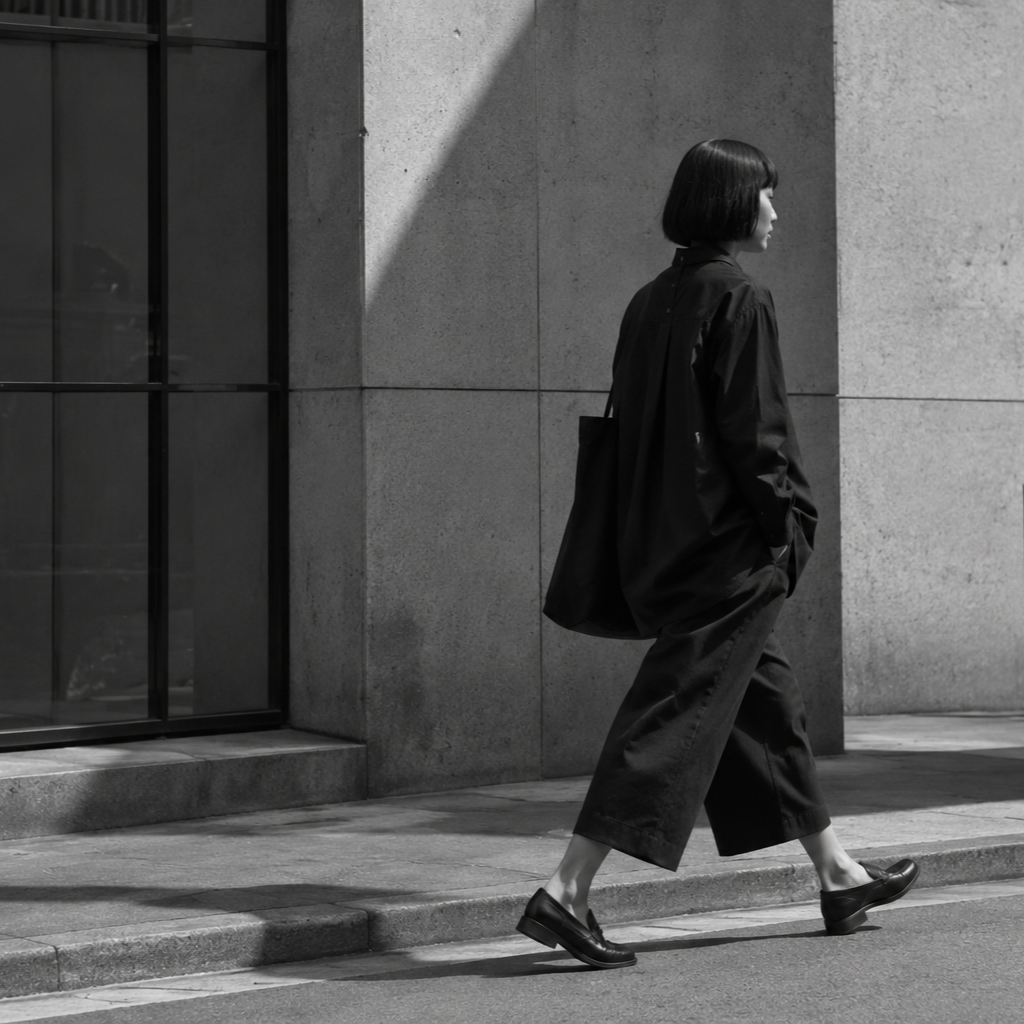
That's where I think good daily wear becomes interesting.
It can be simple without being basic. Comfortable without looking careless. Quiet without being anonymous.
And the details still matter — the proportion of a shirt, the way a fabric falls, the weight of a material, the shape of a trouser, the one detail you notice after you've worn something a few times.
What happens after the lookbook
I think about this a lot when making clothes.
Fashion is very good at showing us the beginning of a garment's life: the campaign, the styling, the perfect image.
But I'm more interested in what happens afterwards.
When you wear it on an ordinary Tuesday. When you wash it and wear it again. When you pack it for a trip because you already know it works. When you stop thinking about the garment and simply reach for it.
That's when something interesting happens.
The garment stops being new, but it becomes yours.
And for me, that's a much more meaningful idea of timelessness. Not something that never changes, but something that continues to make sense in your life.
That's also where h./label comes from for me.
I don't want to tell creative people how they should dress. I don't think there is one creative uniform, and I don't think there needs to be.
I'm more interested in making clothes that can become part of a style someone has already built for themselves — clothes with enough character to feel considered, enough comfort to live in, and enough room for the person wearing them to make them their own.
Looking the same every day isn't necessarily the opposite of having a point of view.
Sometimes, it's what a point of view looks like once you stop trying to prove it.